
AN IDIOT’S GUIDE TO UNDERSTANDING THE MALEMA SENTENCING AND COURT PROCESS
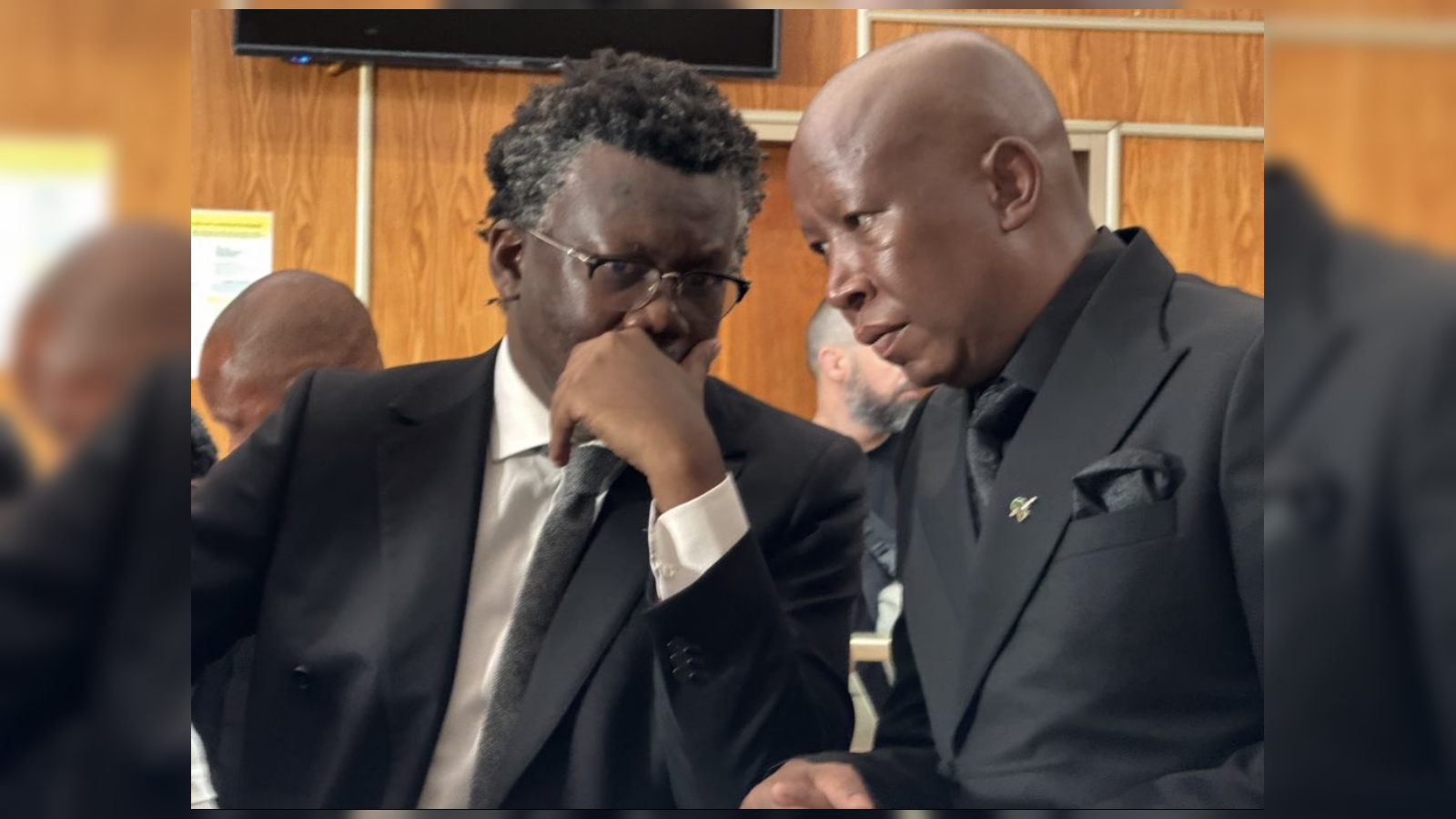
Today’s sentencing proceedings at the East London Magistrate’s Court in Kugompo City are a politically charged moment, but they are unlikely to land EFF leader Julius Malema behind bars — at least not immediately. In October 2025, Magistrate Twanet Olivier found Malema guilty on five counts related to the Firearms Control Act, including unlawful possession of a firearm, unlawful possession of ammunition, discharging a firearm in a built-up area, failure to take reasonable precautions, and reckless endangerment.
The case stems from a 2018 EFF anniversary rally at Sisa Dukashe Stadium in Mdantsane, where video footage showed Malema firing a rifle into the air while on stage in front of a large crowd. His co-accused, former bodyguard Adriaan Snyman, was acquitted of all charges, a fact Malema has seized on to argue that the case against him is illogical and politically motivated.
The sentencing proceedings
During the pre-sentencing phase, a social worker recommended a suspended sentence rather than direct imprisonment. However, both the state and lobby group AfriForum — the complainant in the matter — believe that leniency will send the wrong message to the public, and are expected to argue for a harsher outcome. The charges carry a potential maximum sentence of 15 years.
The appeal strategy: why jail is not imminent
Regardless of what sentence the magistrate hands down, Malema has made clear he will not accept the court’s verdict. He has set up two legal teams at two Eastern Cape courts to help him appeal immediately if he is sent to prison; one in East London and one in Bhisho. He has explained that an appeal suspends the decision of the lower court, meaning that even a custodial sentence would be on hold while the appeal is heard.
Defence lawyer Ulrich Roux confirmed that Malema is fully entitled to challenge both the conviction and the sentence. He explained that the appeal would be heard by the Eastern Cape High Court and could be based either on the severity of the sentence or alleged errors in the magistrate’s interpretation of the evidence. Malema himself has put it plainly: “Once I appeal, the jail sentence they imposed on me is suspended.” He has indicated he intends to fight this case all the way to the Constitutional Court if necessary, a process that legal observers say could take years.
The parliamentary question
Perhaps the more immediately consequential question is not whether Malema goes to jail, but whether he keeps his seat in Parliament. Section 47(1)(e) of the South African Constitution bars any citizen from serving as a Member of Parliament if they have been convicted of an offence and sentenced to more than 12 months’ imprisonment without the option of a fine. However, the Constitution also provides an important safeguard for those pursuing appeals.
No one is considered to have been sentenced “until an appeal against the conviction or sentence has been determined.” Because Malema has vowed to appeal, this constitutional disqualification would not take effect while his appeal is pending. If Malema is given a longer sentence but is provided with the option of a fine, the constitutional disqualification falls away entirely. Similarly, a suspended sentence operates the same way provided he does not actively serve more than 12 months of direct imprisonment without a fine option, he remains an MP. The Zuma precedent is instructive here.
The former president spent years petitioning courts on various aspects of his arms deal case, and his legal battles stretched over more than a decade. Malema appears intent on employing a similar strategy of exhausting every available avenue of appeal, which could keep him out of jail — and in Parliament — for the foreseeable future.
The bigger picture
Legal experts say the outcome of this case could have far-reaching implications for Malema’s political career. A fine or suspended sentence would leave him with considerable leeway, as he could continue as a Member of Parliament.
A direct custodial sentence, by contrast, would trigger a lengthy legal battle that, while ultimately suspending the immediate consequences, would nonetheless cast a long shadow over both the man and his party. For now, Malema remains defiant. He has said: “It doesn’t matter whether the sentence is custodial or not custodial, all of it is going to be appealed.” Whatever the magistrate decides today, the real verdict on Malema’s political future is likely still years away