
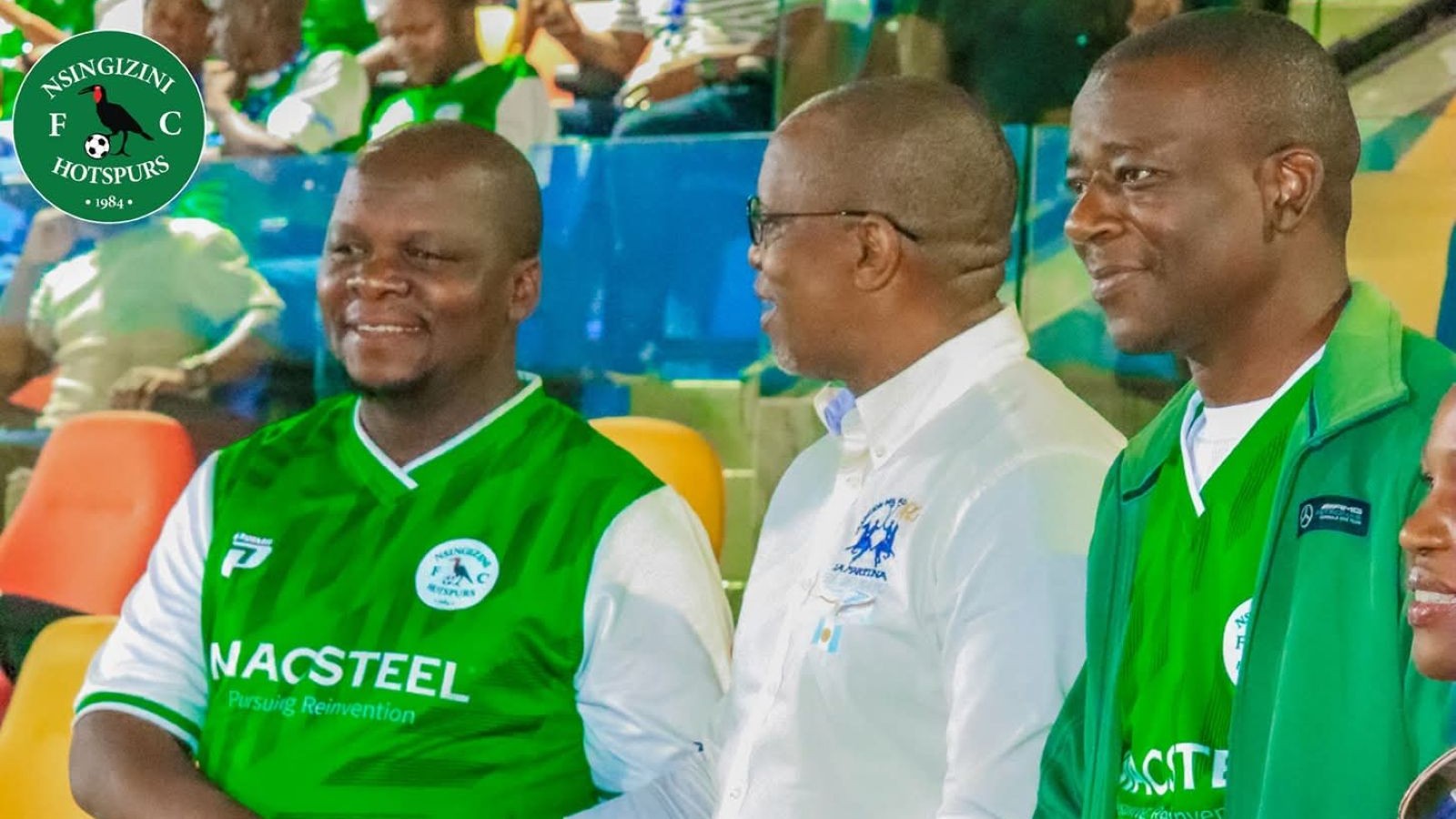
SHIBA POWERING NSINGIZINI’S RISE
In a football landscape often weighed down by uncertainty, underfunding, and administrative turbulence, the rise of Nsingizini Hotspurts FC is a breath of fresh air.
It is a story of vision and courageous leadership.
At the centre of this success is Derrick Shiba, a businessman whose success in the private sector has not only elevated his own profile but has now begun to reshape the contours of local football.
There is something deeply inspiring about seeing an indigenous black Swazi entrepreneur channel his resources, expertise, and passion into sport, not for spectacle, but for structure and sustainability.
Shiba joins the distinguished lineage of Swazi business figures who once transformed the local game through decisive investment and hands-on leadership. The golden eras of clubs such as Mbabane Highlanders, Manzini Wanderers, and Mbabane Swallows were not accidents of fate but were built on the shoulders of business minds who understood that sport, like any serious enterprise, requires governance, planning, and financial discipline. Shiba’s entry into the game revives that tradition at a time when it is needed most.
What makes the Nsingizini story even more compelling is the geography factor. The club’s roots in Shiselweni have injected fresh life into domestic football by drawing in supporters from a region that historically watched top-flight action from a distance.
Suddenly, football is no longer something that happens elsewhere, it is happening at home. The sight of buses filled with passionate supporters traveling north to back their team is more than a spectacle but a revival of community pride.
One can only imagine how transformative it would be if business leaders in towns like Siteki and other parts of the country followed suit, turning football into a national enterprise rather than a geographically concentrated one.
Shiba has done what many business people quietly admit they are unwilling or afraid to do. Privately, numerous entrepreneurs list a catalogue of reasons why football is too risky, too political, too unpredictable, or simply not profitable enough to warrant investment.
Shiba has taught us that progress rarely comes from caution alone but from those willing to test new ground. For that reason alone, Shiba deserves commendation, not only as a club director but as a pathfinder. His example should serve as both encouragement and gentle pressure on the private sector to recognize that football needs them.
Most importantly, the contribution Shiba has made is not just financial but structural. The Nsingizini model borrows from the corporate world through professional administration, clear organizational frameworks, strategic planning, and accountability. It treats football not as a hobby sustained by goodwill but as an institution that must operate with the same rigour as any serious company.
The results speak for themselves. This is precisely the direction the sport must take if it is to survive and thrive in a modern economy.
One hopes that the systems being built will outlive the founder himself, becoming part of Shiba’s durable legacy. Football clubs should not collapse when an owner steps away but they should endure, transition smoothly, and remain competitive.
Indisputably, leadership is the missing ingredient in much of local football administration. In most instances, clubs are run by individuals with passion but without managerial capacity, financial grounding, or long-term vision.
It should be a big concern when people who would struggle to run their families or to sustain even the smallest enterprise find themselves in our football leadership structures. If the country is serious about catching up with global standards, it must welcome more leaders with proven business acumen into the sport.
However, the responsibility does not rest with investors alone. Supporters and other football stakeholders must also create an environment attractive to sponsors. Violence, disorder, and destructive behaviour repel investment faster than any balance sheet can repair. Passion for a club should never translate into hostility toward the game itself. A culture of respect, safety, and decency is necessary.
Government also has a decisive role to play. Public-private partnerships are essential for building and maintaining modern stadiums and training facilities. Policy frameworks must evolve to recognize sport as an economic sector rather than a recreational afterthought. Tax incentives for individuals and companies that invest in football could unlock a wave of private capital.
In many countries, such policies have transformed sport into a driver of employment, tourism, hospitality, and transport. It is time for Parliament to consider legislative measures that make investment in sport make business sense.
While the involvement of people like Derrick Shiba in football is perhaps an act of passion but for the model to spread, it must also make business sense. When properly managed, football can feed families, create careers, unite communities, and project national pride. It can become a very big industry.
Shiba’s Nsingizini Hotspurts FC currently offers a glimpse of what the future of our football could look like. If more leaders follow his path, the beautiful game in the country can change drastically.